Playing Chicken Road for Real Money in the United Kingdom
If you want to play Chicken Road for real money in the United Kingdom, the first thing to understand is that the stake itself is capped. Since April 2019, every online slot — and the UKGC classes crash games in the same category — has carried a maximum stake of £5 per round for players aged 25 and over, and £2 for those aged 18 to 24. That limit sits in the operator's system, not in the game client, and it applies before you press the button to cross the first lane.
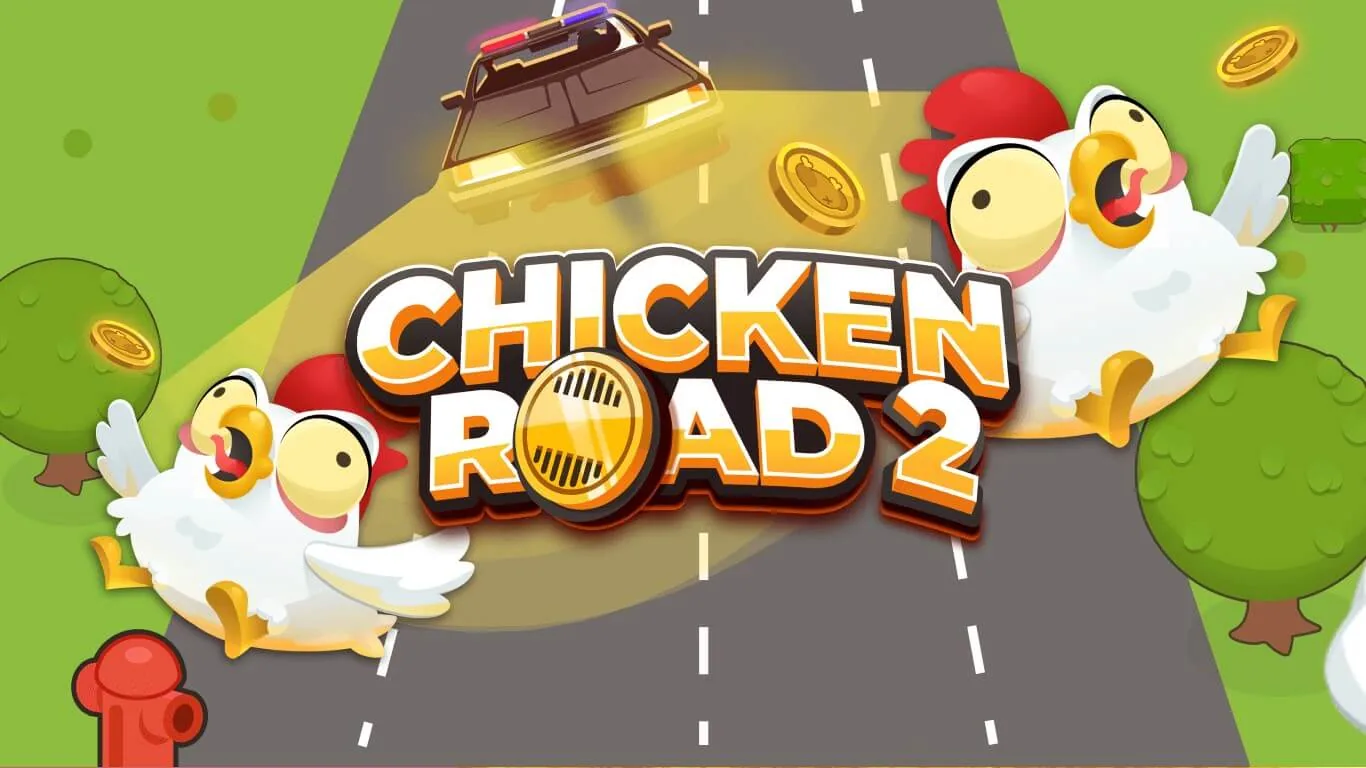
The game itself is an InOut Studios crash-style title: a chicken crosses a multi-lane road, the multiplier climbs with each safe lane, cars appear at random, and you cash out before you are hit. Four difficulty modes set the number of lanes — 30 in Easy, 18 in Hardcore — and the chance of a car blocking your path. The provider lists a maximum win of £17,000 when converted from the $20,000 ceiling in the technical spec, but that figure will be cut by the operator's own win cap if theirs sits lower. Most UKGC-licensed sites set a ceiling between £10,000 and £25,000 per round; check the terms before you stake.
This page walks through where the game appears on licensed UK sites, what the regulator changes for you as a player, how registration and KYC work, which payment methods move money in hours rather than days, and what happens when you try to withdraw for the first time.
What the UKGC licence does to your session
Every operator serving British players must hold a remote gambling licence issued by the UK Gambling Commission. The licence number appears in the footer of the site; you can look it up in the UKGC public register to confirm the operator's legal name, the licence category, and whether any conditions or sanctions have been applied. If the site has no UKGC licence, it is illegal to market to you, and you have no regulatory protection if a dispute arises.
The licence brings enforceable obligations that shape your experience from the moment you create an account:
- Age and identity checks before you can deposit, using electronic verification against credit-reference and public records. If the automated check fails, you upload documents — passport, driving licence, recent utility bill — and wait 24 to 48 hours for manual review.
- Stake caps of £5 per spin for players aged 25 and over, and £2 for those aged 18 to 24. The operator reads your date of birth from the verification data and enforces the lower limit if you fall in the younger bracket.
- Affordability checks triggered from £150 net deposits per calendar month. At the first stage, the operator cross-references your deposit pattern against credit-reference data; if the algorithm flags concern, you may be asked to submit payslips, bank statements, or tax returns before you can deposit further. The threshold is cumulative across all UKGC-licensed sites the operator runs, and it resets on the first of each month.
- Credit cards banned for gambling since April 2020. Only debit cards, e-wallets, and bank transfers are accepted, and the payment method must be registered in your own name. A mismatch between your verified identity and the card or account holder will block the deposit and may freeze your account pending a source-of-funds review.
- GAMSTOP integration: if you have self-excluded through the national scheme, the operator's system will reject your registration automatically. One GAMSTOP registration blocks every UKGC-licensed site for the period you choose — six months, one year, or five years.
These controls do not exist to make the process difficult; they exist because the UKGC holds the operator accountable for every account that slips through. The consequence for you is that the first deposit and the first withdrawal both take longer than they do in unregulated markets, and your session will be interrupted if your spending pattern crosses the affordability threshold.
Four operators as examples of the market
Chicken Road appears on a number of UKGC-licensed casino sites, though not all. InOut Studios is a smaller provider compared to Pragmatic Play or Evolution, so catalogue coverage is patchy. The operators below are examples of the market, not endorsements; each has a specific reason to consider it, and each has a weak point you should know about before you register.
These are illustrative, not exhaustive. The practical advice is to compare withdrawal methods and speed, read the bonus terms in full, and check the UKGC register entry for each operator before you deposit. If an operator's name does not appear in the register, do not create an account.
Choosing a site: the checklist that matters
The choice between licensed operators comes down to a short list of practical questions. Ignore marketing language and focus on the mechanics that control how quickly your money moves and what happens if something goes wrong.
- Look up the operator in the UKGC public register and match the licence number in the footer. Check the licence category — it should include «remote casino» or «remote gambling software» — and look for any conditions or sanctions in the register entry.
- Read the withdrawal-methods page and note which payment channels the operator supports for cashouts, not just deposits. E-wallets and Faster Payments to a UK bank account are processed faster than debit-card returns, which can take up to three working days even after the operator approves the withdrawal.
- Check the stated withdrawal time in the terms, and cross-reference it against recent player reviews on independent forums. The gap between the advertised time and real-world experience is where you find the hidden delays — pending periods, manual review queues, and weekend pauses.
- If you plan to claim a bonus, read the wagering requirement and game contribution. Many welcome offers exclude crash games, or count them at 10–20 per cent toward the playthrough. A 35× requirement on a £100 bonus becomes £3,500 if the game contributes fully, or £17,500 if it contributes at 20 per cent, which makes the bonus a liability rather than a benefit.
- Confirm that Chicken Road appears in the game catalogue before you deposit. Not every UKGC-licensed site carries InOut Studios titles, and the provider's own website does not maintain a current list of operators. The fastest way to check is to log in to a demo account — if the operator allows free play after age verification — and search for the game by name.
Registration, verification, and your first deposit
The registration flow on a UKGC-licensed site starts with basic details — email, date of birth, address — and immediately triggers an electronic identity check. The operator cross-references your information against credit-reference databases and public records such as the electoral roll. If the automated check succeeds, you receive a confirmation email and can log in within a few minutes.
If the automated check fails — because your details do not match the database, or because you have recently moved address and the records have not caught up — you are asked to upload documents. The operator needs one proof of identity, usually a passport or photocard driving licence, and one proof of address dated within the last three months: a utility bill, bank statement, or council-tax letter. The review is manual and takes 24 to 48 hours. You cannot deposit until the check is complete.
Once your account is verified, you can fund it using a UK debit card, PayPal, Apple Pay, or Open Banking via Trustly. Credit cards have been banned for gambling since April 2020, and the payment method must be registered in your own name. A mismatch will block the deposit and flag your account for a source-of-funds review, which adds days or weeks to the process.
The minimum deposit is usually £10, and the money appears in your account balance immediately for debit cards and e-wallets. Open Banking transfers settle within a minute or two. If you deposit more than £150 in net terms within your first calendar month, the affordability algorithm may pause your account and request financial documents. The threshold is cumulative, not per transaction.
After your first deposit, search for Chicken Road in the game catalogue. The search function is inconsistent across operators; some index the game under «crash» or «instant», others under the provider name InOut. If the search returns no result, check the full game grid manually or contact support to confirm whether the game is available in the UK catalogue.
How deposits and withdrawals move in practice
The deposit side is fast: debit cards, PayPal, and Apple Pay clear instantly, and Open Banking via Trustly settles within seconds. The operator credits your account balance as soon as the payment processor confirms the transaction. There is no pending period unless the fraud-detection system flags the deposit, which triggers a manual review and can freeze the funds for up to 24 hours.
Withdrawals are slower, and the first one is always the slowest because the operator conducts enhanced due diligence. Even if you passed the initial identity check, the first withdrawal triggers a document review: proof of identity, proof of address, and sometimes a photograph of the payment card with the middle digits obscured. The review takes 24 to 48 hours, and the withdrawal is held in a pending state until it is complete. You can cancel the withdrawal during the pending period and return the money to your account balance, but once the operator approves it, the transaction is locked.
After the first withdrawal clears, subsequent cashouts are processed according to the method you choose:
- E-wallets such as PayPal: a few hours to 24 hours after approval. The money appears in your PayPal balance, and you can transfer it to your bank account from there, which adds another working day.
- Faster Payments to a UK bank account: same day to two working days. If the operator approves the withdrawal before 14:00 on a weekday, it usually reaches your bank the same day; after 14:00, it arrives the next working day. Weekends and bank holidays pause the process.
- Debit card: one to three working days after approval. The operator initiates a refund to the card you used for the deposit, and your bank processes it as a merchant credit. The time depends on your bank's internal systems, and there is no way to accelerate it.
The withdrawal method must match the deposit method wherever possible. If you deposited with a Visa debit card, the operator will return the first withdrawal to that card, up to the amount you deposited. Only winnings above the deposit total can be sent to an alternative method such as a bank transfer. This is an anti-money-laundering rule, not an operator preference, and it applies across every UKGC-licensed site.
What changes when you play Chicken Road specifically
Chicken Road is classed as a slot for regulatory purposes, which means the £5 and £2 stake caps apply just as they would to a reel-based game. The cap governs the amount you wager at the start of each round, before the chicken moves. You cannot stake £10 and cash out at 2× to return £20; the operator's system will block the bet at the point you try to place it.
The four difficulty modes — Easy, Medium, Hard, Hardcore — do not change the stake cap, but they do change the lane count and the probability of a car appearing. Easy gives you 30 lanes, Hardcore gives you 18, and the number of lanes directly affects how high the multiplier can climb before a car blocks your path. The mathematics are published as provably fair; you can verify each round by checking the server seed, client seed, and nonce against the provider's hashing algorithm.
Crash games are high-variance by design. A string of losses within the first few lanes is normal, and the return-to-player percentage is calculated over hundreds of thousands of rounds, not dozens. If you play on a small bankroll with a £5 stake, you can burn through your balance inside ten minutes. The cash-out button gives you control over when to exit, but it does not give you control over when a car appears. RNG is RNG; the outcome of each round is settled the moment the server generates the random seed, and no strategy changes the probability.
Bonuses rarely cover crash games at full contribution. A welcome offer with a 35× wagering requirement might count Chicken Road at 10 per cent, which means every £1 wagered contributes 10p toward clearing the playthrough. If you claim a £50 bonus with a £50 deposit, you face a £3,500 wagering target (35× £100), but playing Chicken Road only moves the counter by £1 for every £10 staked. You would need to wager £35,000 in total to clear the bonus, which makes it uneconomical unless you plan to play the game anyway over a long period.
| Difficulty | Lanes | Risk level | Typical maximum multiplier |
|---|---|---|---|
| Easy | 30 | Lowest | 15–20× |
| Medium | 25 | Moderate | 10–15× |
| Hard | 22 | High | 8–12× |
| Hardcore | 18 | Highest | 5–10× |
The win cap set by the operator applies to the total payout, not the multiplier. If the site's terms state a £10,000 maximum win per round, and you stake £5 in Hardcore mode and cash out at 2,000×, your payout is capped at £10,000, not the £10,000 you would receive without the cap. Always check the operator's win limits in the terms before you choose a difficulty mode that can produce extreme multipliers.
The regulatory picture in November 2026
The UK gambling market has tightened considerably over the past three years. The £5 and £2 stake caps on online slots took effect in April 2019, affordability checks became mandatory from September 2023, and credit-card deposits were banned in April 2020. Remote Gaming Duty rose to 40 per cent of gross gaming revenue in April 2026, which increased operator costs and led some smaller licensees to exit the UK market or raise withdrawal minimums and tighten bonus terms.
The UKGC has signalled further intervention on affordability and advertising. Consultation papers published in early 2026 proposed lowering the affordability threshold from £150 to £100 net deposits per month, and extending mandatory spend-tracking across all licensees rather than applying it only to operators flagged by the Commission. If enacted, those rules would take effect in 2027 and would require operators to request financial documents earlier and more frequently.
For you as a player, the trajectory is toward more friction: longer verification times, more intrusive checks, and narrower margins for operators, which translates to fewer bonuses and slower customer-service response. The trade-off is stronger consumer protection and a lower risk of unlicensed operators entering the market through search-engine loopholes. The UKGC model prioritises safety over convenience, and that philosophy is unlikely to reverse.
If you are registered with GAMSTOP or under 18, you cannot legally play Chicken Road for real money on any UKGC-licensed site. GAMSTOP blocks every operator with a UK remote licence for the period you choose — six months, one year, or five years — and the exclusion cannot be lifted early. Support is available through BeGambleAware if gambling has become a problem; the service is free and confidential.
FAQ
Can I play Chicken Road in demo mode before I deposit?
Many UKGC-licensed operators allow demo play after you have completed age verification, but the game must be in their catalogue. InOut Studios titles are less widely distributed than those from larger providers, so not every site that offers crash games will carry Chicken Road specifically. The fastest way to check is to create an account, pass the identity check, and search for the game in free-play mode. If the operator does not stock it, your only option is to try a different licensed site.
Why is my stake capped at £2 when the game allows higher bets?
The UKGC enforces a £2 maximum stake per spin for players aged 18 to 24, and £5 for those aged 25 and over. The cap is applied by the operator's system based on the date of birth you provided during registration, not by the game client itself. If your account is flagged as belonging to the 18–24 age group, you cannot override the £2 limit no matter which difficulty mode or game you choose. The cap applies to every online slot and crash game on the platform.
How long does the first withdrawal take on a UKGC-licensed site?
The first withdrawal triggers enhanced due diligence, which adds 24 to 48 hours to the process. The operator reviews your identity documents, proof of address, and sometimes a photograph of your payment card. Once the review is complete and the withdrawal is approved, the time depends on the method: e-wallets take a few hours to 24 hours, Faster Payments to a UK bank account take the same day to two working days, and debit-card refunds take one to three working days. Subsequent withdrawals are faster because the KYC check is already done.
Do I pay tax on winnings from Chicken Road in the UK?
No. Gambling winnings are tax-free for the player in the United Kingdom, and you do not declare them on a self-assessment return. The operator pays Remote Gaming Duty — raised to 40 per cent of gross gaming revenue in April 2026 — but that cost does not touch your payout. You receive your winnings in full, whether you cash out at 2× or 200×.